Ganoderma lucidum culture
China, the birthplace of Ganoderma lucidum application and Ganoderma lucidum culture, can be traced back as far as the Yangshao culture and ancient sites more than 6,000 years ago, more than 2,000 years before the West.
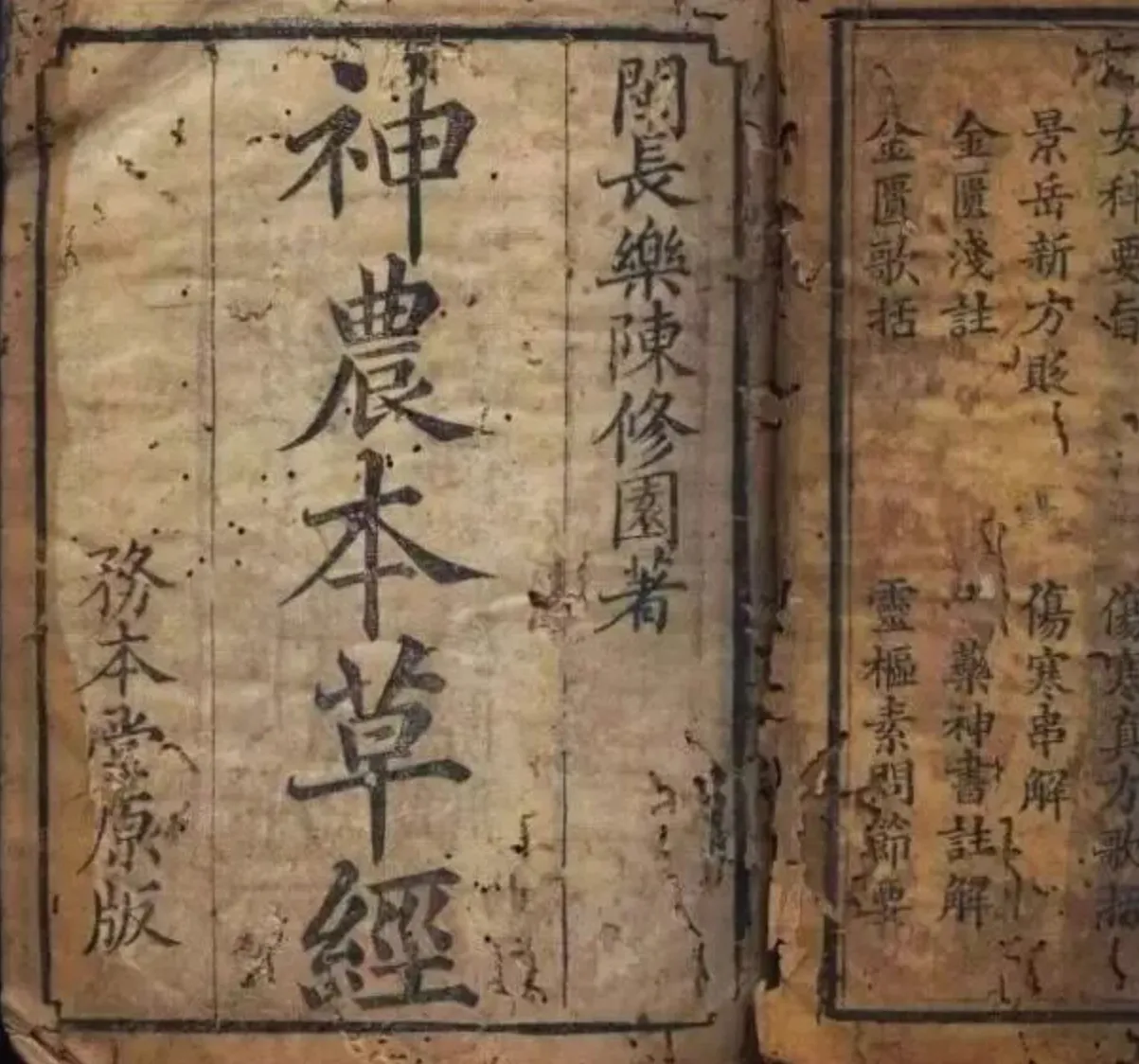
“Shennong Ben Cao Jing” has a history of more than 2000 years ago, it was written in the Eastern Han Dynasty, is China's earliest monograph of a pharmacological, in the medicinal properties of ganoderma lucidum, the efficacy of the introduction, at the same time on the classification of ganoderma lucidum, the smell, the main treatment of the exposition: ganoderma lucidum, ”to raise the life of the sky, non-toxic, more than serving for a long time does not harm the body, light body and benefit the qi, aging and prolonging the years. It is not poisonous.
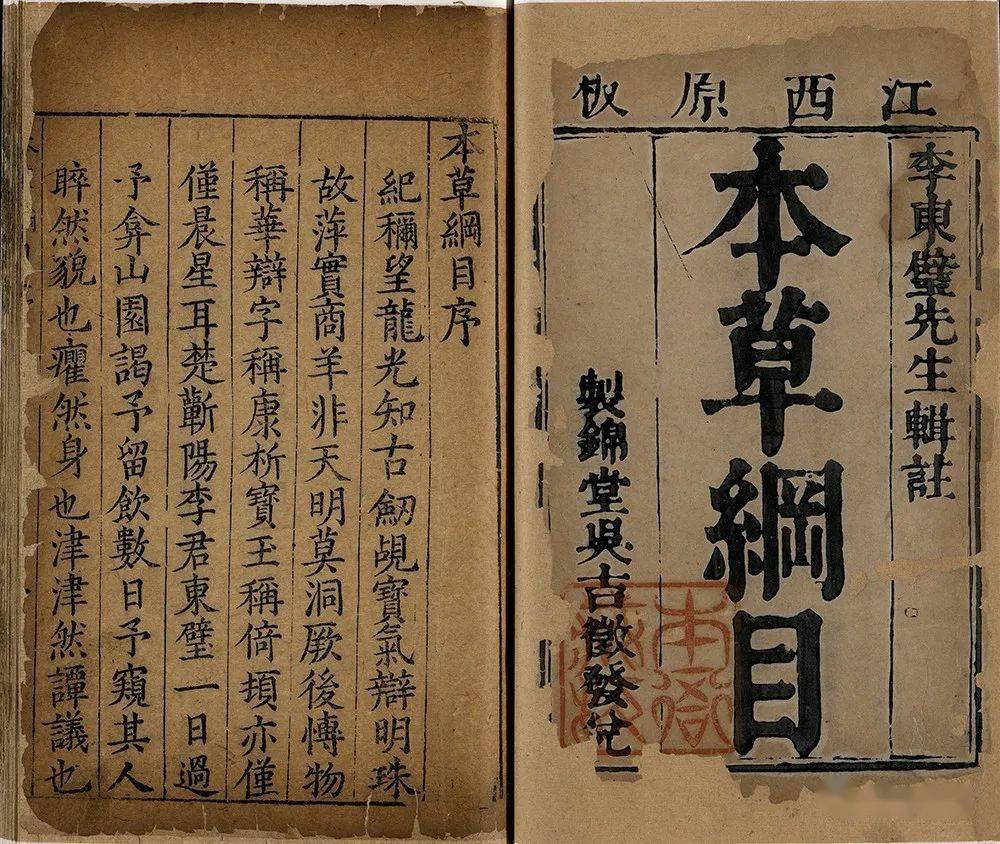
“The Compendium of Materia Medica”, written by Li Shizhen in the Ming Dynasty, recorded more than 1,800 kinds of medicines and more than 10,000 formulas, and is known as the “Oriental Medicine Dictionary”. According to the Compendium of Materia Medica, Ganoderma lucidum is “bitter, flat, non-toxic, beneficial to the heart and qi, filling the heart with blood, helping the heart to fill the veins, calming the mind, and benefiting the lungs. It replenishes the middle, increases wisdom, good color, facilitates joints, strengthens tendons and bones dispels phlegm, strengthens bones, and promotes blood circulation.”
The auspiciousness and well-being of Ganoderma lucidum
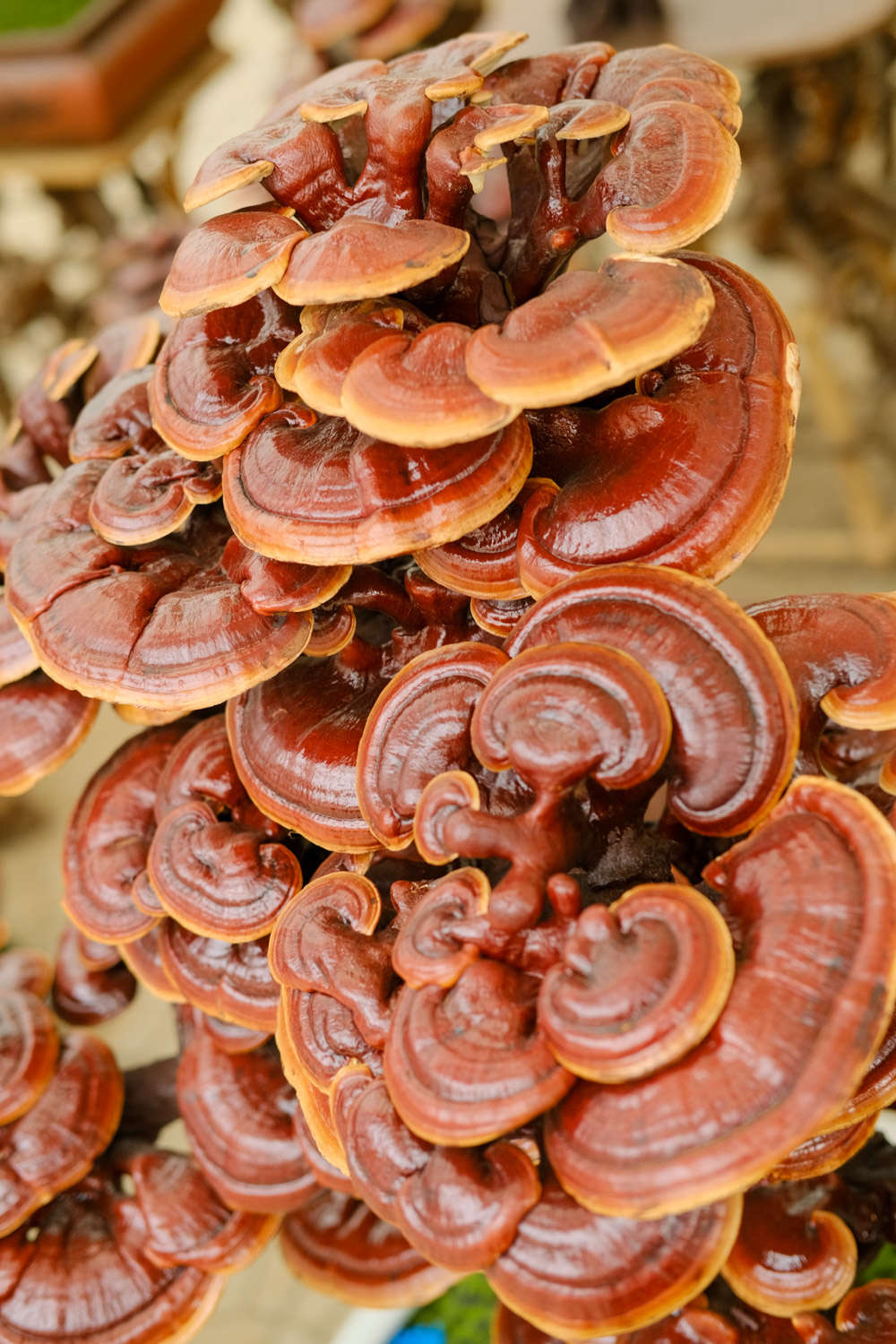
The shape of Ganoderma lucidum is like an auspicious cloud with its own “auspiciousness”, just like the clouds under the feet of the immortals in the mythological stories, floating like a fairyland.
Therefore, in China, many ancient temples and monasteries, pavilions, costumes, embroidery, paintings, carvings, porcelain, as well as a large number of excavated artifacts, can also be found in many of the evolution from the Ganoderma lucidum “auspicious cloud” and “Ruyi” image, such as Beijing Tiananmen Square in front of the Huabiao On the table in front of the Tiananmen Square in Beijing, “coiled dragon driving Lingzhi auspicious clouds”; relief in the Temple of Heaven on the roof of the Hall of Prayer for the Year of the Dragon “around the nine dragons of Lingzhi auspicious clouds”; the Forbidden City in front of the Palace of Beijing carved with coiled dragons and Lingzhi auspicious clouds of the Royal Road; Beijing Confucian Temple fence carved Lingzhi potted plants, and so on. All these have become the witnesses of the worship of Ganoderma lucidum and the inheritance of Ganoderma lucidum culture in ancient China.
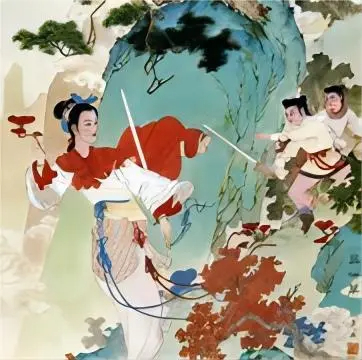
The White Queen steals the immortality herb (idiom); fig. disappear from the land of the immortals
The Tale of the White Snake was widely popular in China, and lingzhi played an integral role in the text. Fa Hai, a monk of the Jinshan Temple, had warned Xu Xian that the White Snake was transformed by a snake demon. On the day of the Duan Yang Festival, Xu Xian listened to Fa Hai's slanderous words and secretly mixed male yellow into the White Snake's wine, causing Bai Suzhen to take on the original form of a white snake after drinking, and Xu Xian fainted from the shock of seeing it. When Xu Xian saw this, he was shocked and fainted. In order to save her husband's life, she flew to the Kunlun Mountains to steal Lingzhi, a kind of herb that can bring the dead back to life.
The book describes: The White Maiden stooped down, quietly picked one in her mouth, and was about to fly away on a white cloud, when she suddenly heard a cry in the air, “Cackle, Cackle, Cackle!” Suddenly heard in the air “cackling yo-yo!” A call, guarding the ganoderma lucidum fairy grass of the crane child and deer child came. They saw the White Lady stealing the grass, how would they let the White Lady go. The white crane then unfolded its large wings, stretching out its long beak is about to peck the white lady, suddenly from behind reached a curved walking stick, the white crane's long neck hooked. The White Maiden turned around and saw an old man with a white beard standing in front of her, who turned out to be the South Pole Immortal Weng. She cried and begged the NJW, “Give me a ganoderma lucidum herb to save my official!” The South Pole Immortal Weng had compassion, the thought and its love for her husband, stroked his white beard, nodded and agreed. The White Lady thanked the South Pole Immortal Weng, the ganoderma lucidum immortal grass, flew home in a hurry. She boiled the herb into medicinal juice and poured it into Xu Xian's mouth. After a while, Xu Xian came back to life.
Qin Shihuang's Search for Ganoderma Lucidum
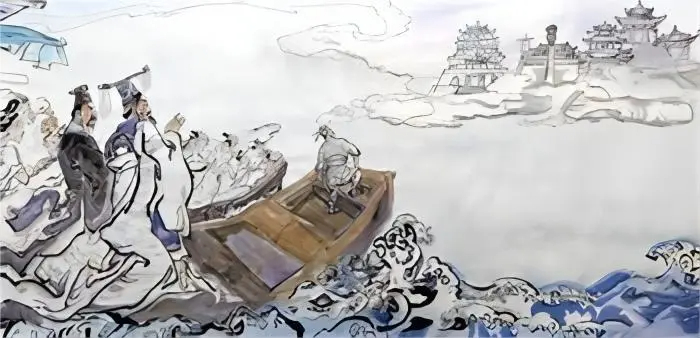
When Xu Fu returned from his first voyage, he said that he had climbed Mount Penglai and seen the elixir of immortality, but the great god on the mountain thought that the gifts he brought were too little and did not let him take the elixir away, saying that in order to get the elixir, he had to select and send excellent men and women and craftsmen. When Emperor Qin Shi Huang heard that Xu Fu had seen the elixir, he was so happy that he immediately selected 3,000 boys and girls and a group of able craftsmen to give to Xu Fu, and ordered him to go and seek the elixir. Xu Fu went around the sea for a while but failed to get the elixir. He came back to Qin Shi Huang and told him that he failed to get the elixir this time because there were big fishes in the sea which prevented the ship from approaching to the immortal mountain, and that he had to equip himself with good archers and advanced weapons in order to go to the immortal mountain.
Coincidentally, at that time, Emperor Qin Shi Huang had a dream that he fought with the god of the sea, which, according to the interpretation of a dream-occupying doctor, was the very symbol of the big fish of the scaly dragon. So, Emperor Qin Shi Huang believed in Xu Fu's story and selected another archer and weapons for him, and went down to the sea himself. When the boat traveled to the vicinity of Zhifu Island, he really encountered a big fish, and Qin Shi Huang personally shot it, thinking that there was no obstacle to go up to the immortal mountain now. Who knows, the sacred mountain and the elixir were still not found. Xu Fu no longer dared to go to see Qin Shi Huang, so he took 3,000 boys and girls and a group of craftsmen and went to Japan, where he prospered and survived.
 Info@xtongfood.com
 +86 13858575598
 Tongjiang,Bazhong,Sichuan China
Copyright © 2024 XTONG Co.,Ltd. All Right Reserved. Designed & SEO by hoogege.com.cn Sitemap | XML
Welcome to text me on WhatsApp or send me an email to info@xintongfood.com

 HOME
HOME PRODUCTS
 ABOUT US
 BLOG
BLOG CONTACT US