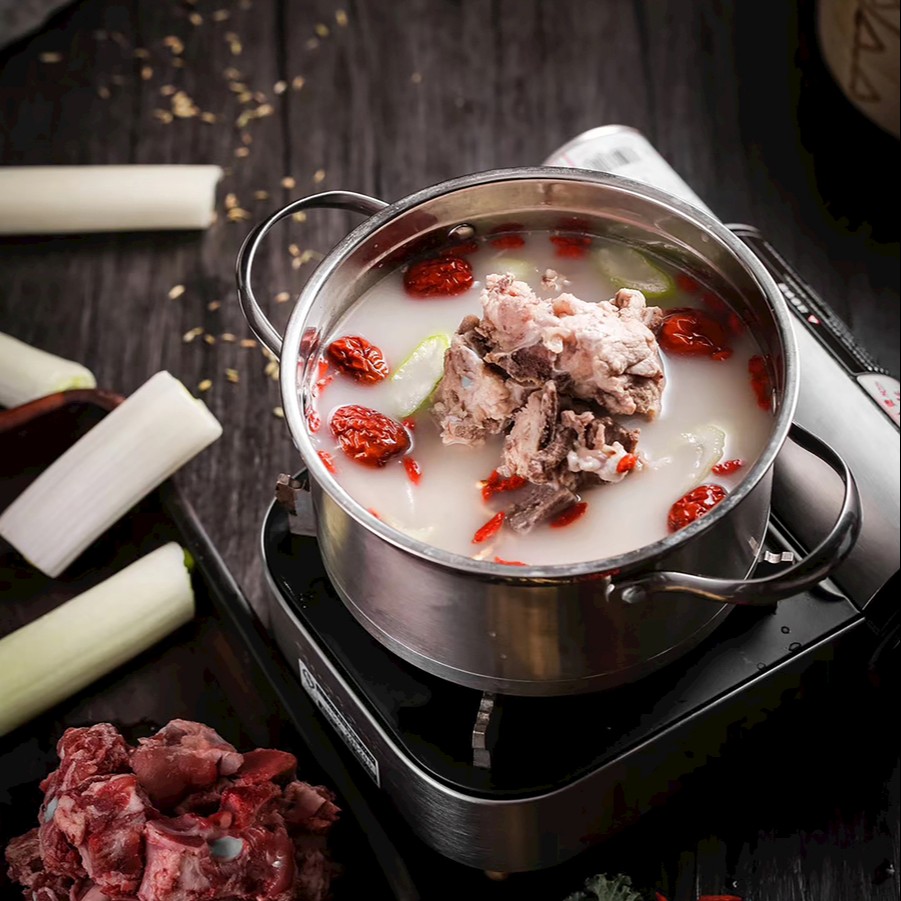
In the jianghu of Chinese hot pot, the base is the soul that determines the success or failure of a pot's flavor. Bone soup hot pot base, with its mellow aroma and nourishing physical and mental heritage, has always been sitting on the throne of the “king of soup base”. From the “tripod food” in the Shang and Zhou Dynasties to today's boiling hot pot feast, a pot of bone soup across the millennium, the precipitation of time and the temperature of craftsmanship melted into the tip of the tongue.
The Dance of Bone and Fire: Making Soup is a Practice
A pot of excellent bone broth base hides a secret from the selection of bones. Beef bones should be selected from the thick part of the bone marrow, pork spine should pay attention to the golden ratio of sinews and bones, and the addition of old hen will give the soup a bright color. In the Sichuan and Chongqing regions, chefs will even mix in duck racks and fish bones to make the layers of flavor stack up like a wave.
The real work lies in the word “simmering”: boiling over high heat to force out the blood and froth, and simmering for more than eight hours to release calcium, collagen and amino acids into the boiling water. Guangdong's philosophy of soup boiling meets hot pot here - the soup needs to be as clear as amber, with fine oil floating on the surface, but it is amazingly light in the mouth. Yunnan's clay casserole, Northeast's old cast iron pot, different containers make the bone soup or add a touch of earthy fragrance, or a bit more metal warmth.
The science of flavor: why bone broth is so addictive?
Modern nutritional science has revealed the secret of bone broth's addiction: the natural gelatin in the bone marrow gives the broth a smooth gelatinous texture, while the glutamic acid, inosinic acid and guanosinic acid precipitated by prolonged simmering are precisely the “golden triangle” of fresh flavor. Japanese scholars have used electronic tongue analysis, bone broth can be more than 5 times the strength of the fresh flavor of ordinary broth. Even better, the bones of calcium, magnesium, phosphorus and other minerals in the acidic broth more easily absorbed by the body - this may explain why the Mongolian steppe with sheep bone soup for the nomadic people to withstand the cold, and the Chaoshan people with beef bone soup for diners to relieve fatigue refreshing.
From tradition to creativity: seventy-two variations of bone broth base
In Yunnan mushroom bone soup pot, chicken fir and porcini mushrooms wild fragrance and bone soup entwined; Cantonese style hit the side of the stove, ginseng, Chinese wolfberry and pork bones of the combination of medicinal cuisine boiled out of the warm philosophy of health; and the new hot pot restaurant launched the “collagen bone soup pot”, so that the soup base cooled down into a jelly-like jelly, to become a young people sought after the beauty of the holy grail. More interesting is that the Sichuan master will be bone soup and butter combination - butter to lock the overbearing aroma, bone broth and spicy hot and dry, the achievement of the Sichuan hot pot “spicy but not choking, not greasy and fragrant” a wonderful balance.
 Info@xtongfood.com
 +86 13858575598
 Tongjiang,Bazhong,Sichuan China
Copyright © 2024 XTONG Co.,Ltd. All Right Reserved. Designed & SEO by hoogege.com.cn Sitemap | XML
Welcome to text me on WhatsApp or send me an email to info@xintongfood.com

 HOME
HOME PRODUCTS
 ABOUT US
 BLOG
BLOG CONTACT US