Agaricus blazei
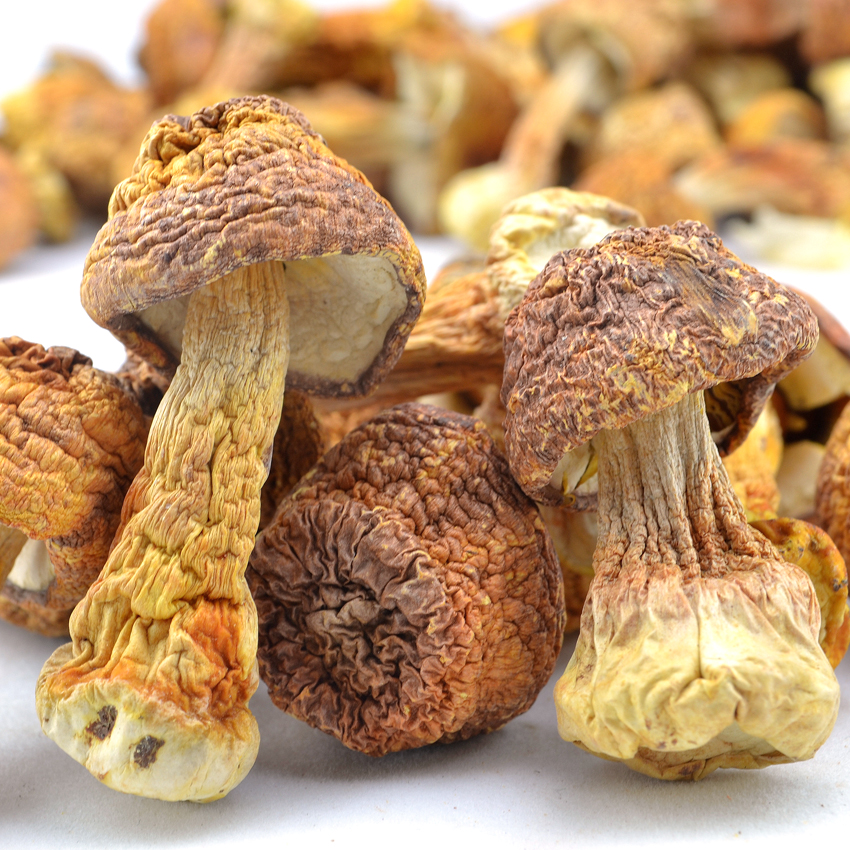
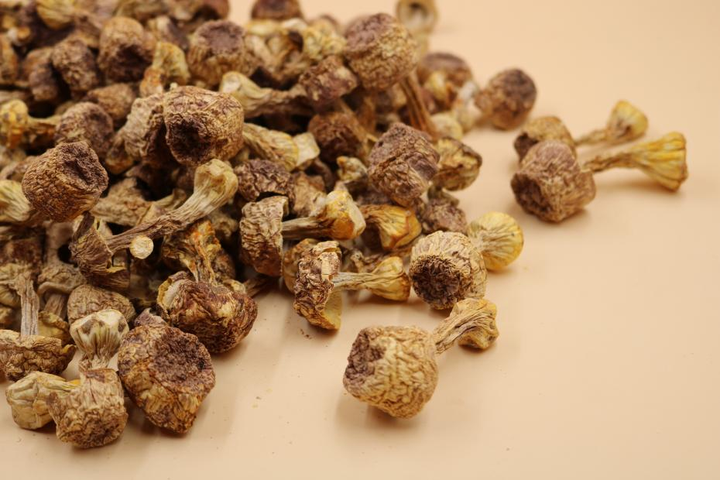
Agaricus blazei (Latin name: Agaricus blazei), also known as Bastille mushrooms, Brazilian mushrooms, small pine mushrooms, etc., Umbelliferae umbelliferae fungi.
Agaricus blazei has a stout fruiting body with a cap diameter of 5-11 centimeters; the flesh in the center of the cap is up to 11 millimeters thick; the fungus ring is large, white at first and slightly brown later; the spores are broadly ellipsoid to ovate. It requires high-temperature, humid and ventilated environmental conditions, and grows on woodland or grassland in summer and fall. It is native to Brazil, Peru and other places. Mainly distributed in Jilin, Yunnan and other places. It has a certain auxiliary therapeutic effect on stroke and myocardial infarction.
Matsutake mushrooms are very picky about the growing environment and are mainly wild; Agaricus mushrooms can be artificially farmed in large quantities. The matsutake mushroom grows on trees and the agaricus mushroom grows on grass. Matsutake mushrooms have a strong aroma, while Agaricus mushrooms have a light almond flavor. Agaricus can be made into pigeon mushroom soup, agaricus pork bone soup, and agaricus tea tree mushroom stewed chicken leg
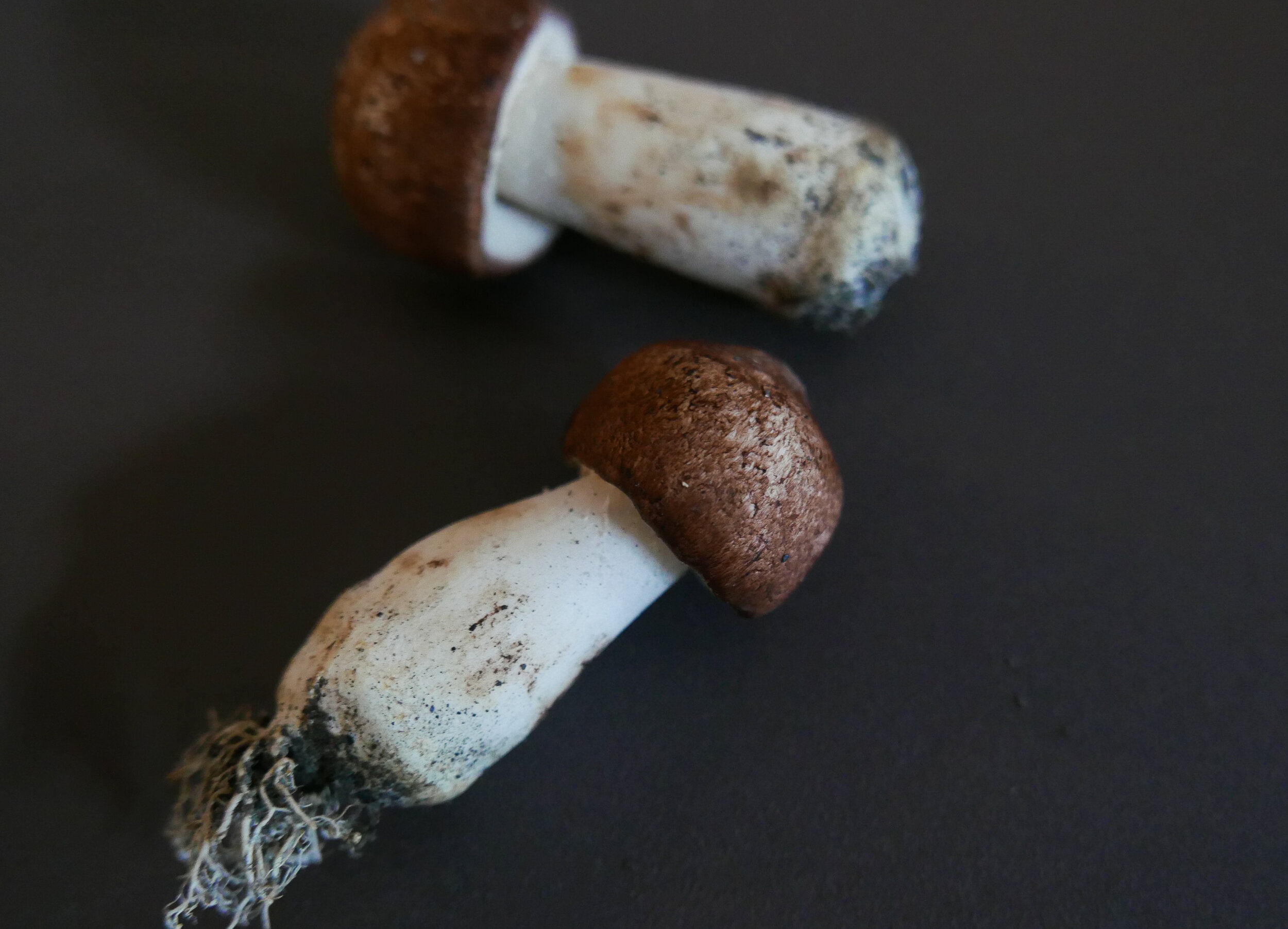
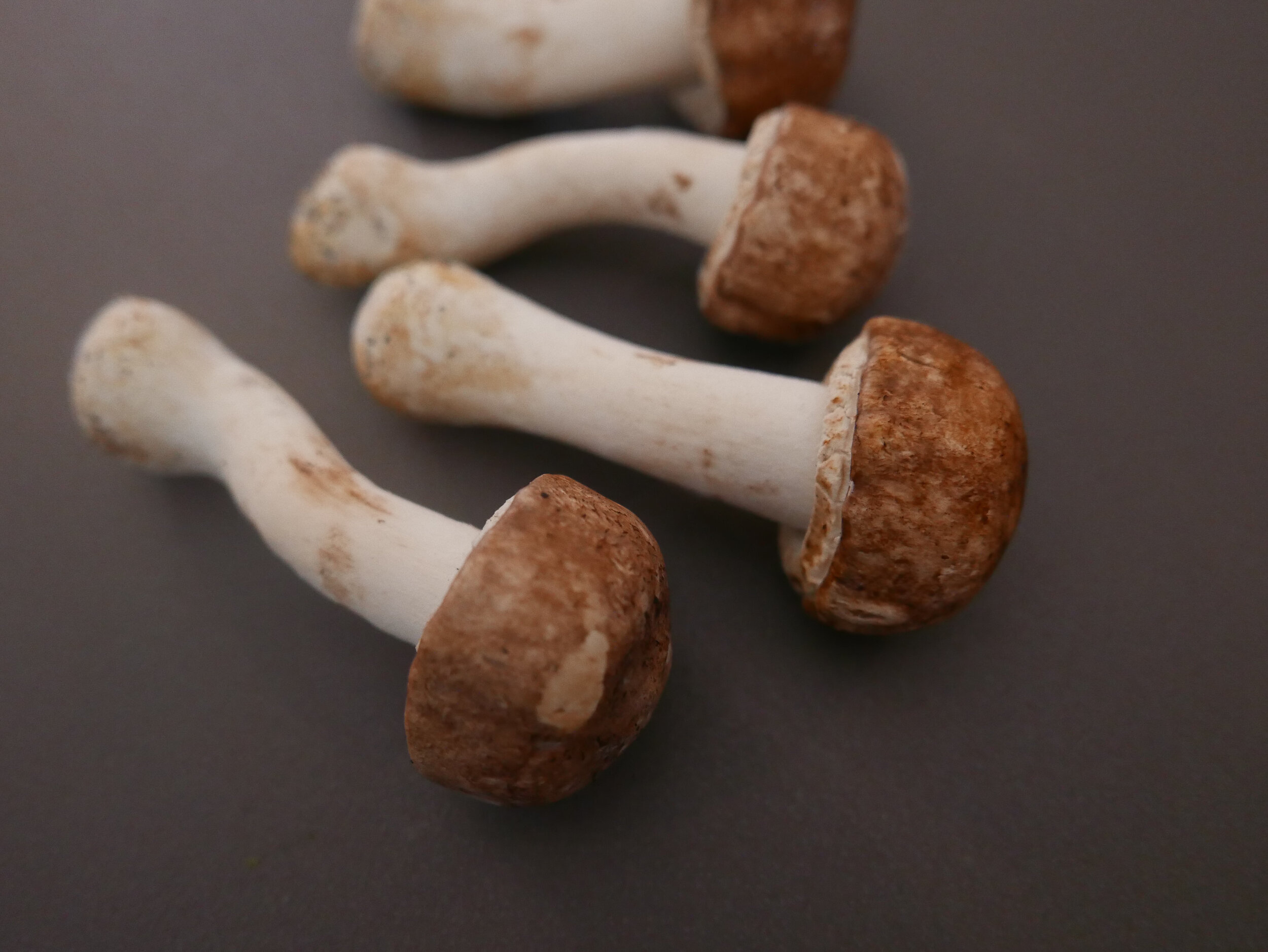
Agaricus blazei sub entity is stout, mycorrhizal cap diameter 5 to 11 cm, at first hemispherical, gradually into a steamed bun shape and finally spreading, the top center is flat, the surface has light brown to chestnut-colored fibrous scales, the edge of the cap has the fragments of the mycorrhizal curtain. Mycelium in the center of the cap up to 11 mm thick, thin at the edges, mycelium white, turning slightly orange-yellow when injured. The hyphae are free, crowded, 8-10 mm wide, turning from white to flesh-colored, then dark brown. Mycelium terete, medium solid, 4~14 cm long, 1~3 cm in diameter, equal thickness above and below or base expanded, surface nearly white, turning nearly yellow when touched by hand.
Above the fungus ring initially has powdery to woolly small scales, later shed into smooth, hollow. Mycorrhizal ring large, superior, membranous, initially white, later brownish, with brownish woolly appendages under the membrane. Spores broadly ellipsoid to ovate, without bud holes. Mycelium without lock-like union.
Agaricus blazei, it is a kind of summer and fall growth of putrefactive fungi, living in high temperature, humid, ventilated environment, with almond flavor, crisp and tender taste. Agaricus mushrooms have tender caps, brittle stalks, excellent taste, pure flavor, and high food value. Fresh fruit entities containing 85% -87% moisture; edible part of each 100 grams of dry products containing 40-45 grams of crude protein, soluble sugars 38-45 grams, 6-8 grams of crude fiber, 3-4 grams of fat, 5-7 grams of ash; protein composition, including 18 kinds of amino acids, the human body's 8 essential amino acids, but also contains a variety of vitamins and ergosterol. It contains mannan on the inhibition of tumors (especially ascites cancer), medical hemorrhoids and fistulas, enhance energy, prevention and treatment of cardiovascular disease have therapeutic effects.
Agaricus is a saprophytic fungus that occurs in the summer and fall on grassy areas with animal manure, requiring high temperature, humidity and ventilated environmental conditions.
①Nutritional requirements
Agaricus blazei mainly decomposes and utilizes crop stalks, such as rice straw, wheat straw, corn stalks, cottonseed hulls, etc. and wood shavings as carbon source; soybean cake, peanut cake, bran, cornmeal, livestock and poultry manure and urea, ammonium sulfate, etc. as nitrogen source. According to experimental research, Agaricus blazei can utilize sucrose and glucose, but not soluble starch; it can utilize ammonium sulfate, with the best concentration at 0.3%; it can also utilize ammonium nitrate, but not peptone.
②Temperature
Mycelium development temperature range 10 ~ 37 ℃, moderate temperature 23 ~ 27 ℃. Substrate development temperature range 17 ~ 33 ℃, the appropriate temperature 20 ~ 25 ℃.
③Moisture
The optimum moisture content of the culture material is 55%~60% (the ratio of material and water is 1∶1.3~1.4), the optimum moisture content of the soil layer is 60%~65%, and the air humidity of the mushroom room is 75%~85%.
④Light
Agaricus blazei silk growth does not need light, dark culture can be normal growth, while the differentiation stage of the growth of the substrate requires diffused light, at about 200 lux. This is conducive to the normal development of the substrate, including the color change. If the light is too dark, deformed mushrooms will easily occur.
⑤Air
Agaricus blazei is an aerobic fungus. Both mycelium and substrate growth and differentiation need a lot of oxygen. At the stage of nutritive growth, the mycelial growth of Brazilian mushrooms is more resistant to CO2, and the concentration of CO2 reaches 4500×10-6, and its mycelium can still grow normally. During the period of mushroom cultivation, it is very sensitive to CO2 and requires the concentration of CO2 to be below 3000×10-6, and greater than or equal to 10,000×10-6 will not be able to form the protoplast of the substrate. So ventilation is very necessary. Since the culture material of Brazilian mushroom itself requires slightly more moisture, it is more important to prevent the dissipation of too much moisture when ventilating.
⑥pH value
The pH value of the culture material is 3.5-8.5, the mycelium can grow, the optimum pH value is 6.0-6.8, the pH value of the mulch is 6.5-7.5, and the pH value is 7.0, which is more suitable. pH value is below 5, and the growth of mycelium will be inhibited above 9.5, and even stop growing.
 Info@xtongfood.com
 +86 13858575598
 Tongjiang,Bazhong,Sichuan China
Copyright © 2024 XTONG Co.,Ltd. All Right Reserved. Designed & SEO by hoogege.com.cn Sitemap | XML
Welcome to text me on WhatsApp or send me an email to info@xintongfood.com

 HOME
HOME PRODUCTS
 ABOUT US
 BLOG
BLOG CONTACT US